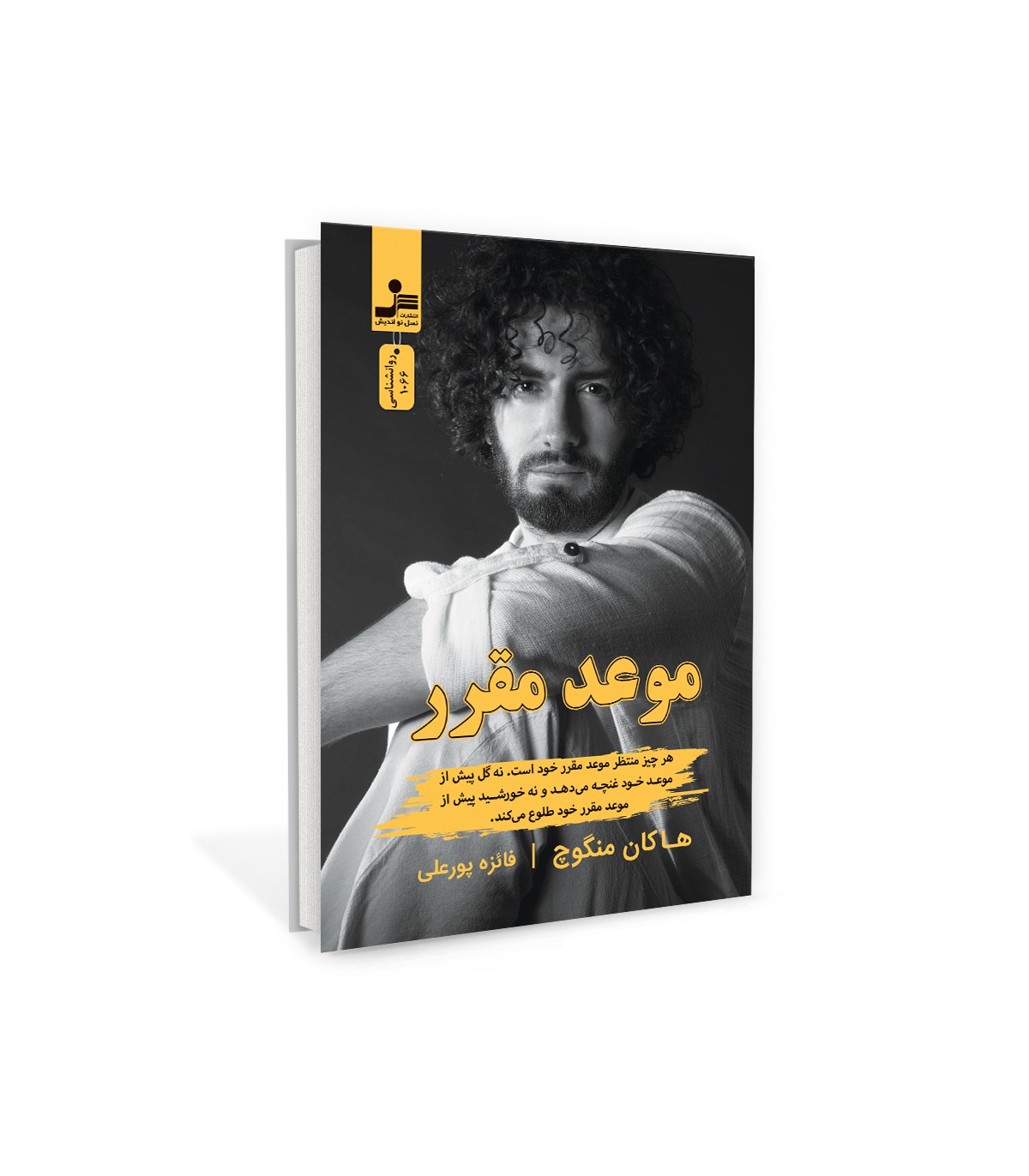
The Appointed Time, a beautiful book by Hakan Menguc, is about love, patience, self-discovery, and finding meaning in life. It is also inspired by the thoughts of Shams and Rumi.

One of the book’s main messages is that everything has its own time, and nothing can be forced to happen before its proper moment.

Hakan Menguc writes that patience does not mean standing still or stopping; it means preparing yourself. If we want something, we must take steps toward it. It is natural not to see the results immediately, and we need to accept that.

The author says that love should not be limited to finding one person. Love means something different to every person. We should first begin loving and learning how to love from within ourselves. We should not tie our happiness to the presence of another person, because love is not something we receive from someone else; instead, it is something we must nurture within ourselves.

One of the central ideas of the book is the meeting between Shams and Rumi. Shams was not simply a teacher to Rumi. He changed Rumi’s perspective on everything. Shams awakened something within Rumi that he had believed did not exist for many years.

Being a learner does not mean believing that you know everything or that you are above everyone else. A person truly learns when they accept that they do not know everything and acknowledge their own mistakes.

The Appointed Time repeatedly leads readers inward. Knowing oneself is one of the hardest things, because people become caught up in emotions, fears, desires, and personal judgments. Self-awareness means asking ourselves:

“What do I want?”
“What am I afraid of?”

In life, we have a true self and another self that we show to others. Sometimes we wear masks to hide our sadness or act against our inner wishes in order to be accepted.

Hakan Menguc says that human worth never needs the approval of others. We often measure our value by our appearance, wealth, status, number of friends, or other people’s approval, while human worth is much deeper than these things.

The book also points to the roots of human behavior. Sometimes people always try to appear superior; perhaps deep inside, they feel more insecure than they show. This perspective helps us look more deeply at people’s behavior instead of judging them.

The book emphasizes that we should not judge others. It may be easy to quickly find other people’s faults, but seeing our own faults is more difficult. We often judge others by the outcome of their actions, while we explain our own actions according to the circumstances we have faced.

Sometimes something about another person bothers us because it may reveal something about ourselves. This does not mean that we share that person’s traits; rather, the reaction we have toward them can show us something about our own feelings. Understanding others should never become a way to humiliate them, because every person has a weakness or a past that others may not know about. Kindness means choosing to act more humanely when you have the power to humiliate someone.

At times, we become lonely in life. We become afraid and think that being alone must mean something is wrong. Yet some forms of solitude are the best opportunities to know our inner selves. Sometimes, in order to hear our own voice, we need to move away from the noise around us. Solitude is a way of knowing oneself, not a sign of failure.

Hakan Menguc says that people often want to have everything under control, but the truth is that the greatest part of our lives is not under our control.

For example, we can plan something, make a decision, and work hard, but we can never force it to happen exactly as we wish.

Most of us have a habit of regretting the past in the present, while losing the opportunities we have today simply because we are thinking about yesterday. The past is for learning, not for living again.

Life has never been a competition. One of people’s bad habits is comparing their lives with the lives of others. But the truth is that every person has their own path in life. Not everyone is meant to succeed at the same age, in the same place, or at the same time, nor receive what they dream of at the same moment.

When people face difficulties in life, it is often that hard and exhausting path that becomes their greatest teacher. Such a path makes a person’s perspective more precise, mature, and profound.

The book explains that what you have such as education, a job, money, wealth, or social status is not your identity. Real change begins within a person. Instead of immediately reacting to the behavior of others, we should first ask ourselves why we feel the need to react in that way.

Finally, the personal message I took from the book is this: everything has its own time.

The people who enter our lives, opportunities, and many other things all have their proper time. We should always try to know our true selves, not the image that others create of us. We should not connect our value to other people’s decisions and judgments. We should not search for love inside others; instead, we should begin from within ourselves. We should accept solitude, because it can be the best opportunity to know ourselves and our inner world.

What I loved most about The Appointed Time is this: if something has not happened yet, it does not mean that it will never happen in the future or that it is not meant for me. Perhaps its time has simply not arrived yet perhaps its appointed time has not come.
1 Followers
0 Comments
Comments
No comments yet. Be the first to share your thoughts!